congo research network
Call for Contributions
The Congo Research Network (CRN) invites researchers at all levels to contribute to the “Field Notes” section of its website. We are seeking a series of four blog posts (maximum 1000 words each, in English or French) recounting your fieldwork experiences in Congo. These posts will be published online weekly throughout an entire month.
This opportunity is open to researchers who wish to share their insights and demystify the experience of conducting research in and on Congo. If you are interested, please contact Katrien Pype (katrien.pype@kuleuven.be). To streamline the online publication process, a single submission containing all four blog posts is required. For any inquiries, feel free to reach out to Cai Chen (cai.chen@ulb.be).
Appel à contributions
Le Congo Research Network (CRN) invite les chercheurs de tous niveaux à contribuer à la section « Field Notes » de son site web. Nous recherchons une série de quatre billets (maximum 1000 mots chacun, en anglais ou français) relatant vos expériences de travail de terrain au Congo. Ces billets seront publiés en ligne chaque semaine pendant un mois entier.
Cette opportunité est ouverte aux chercheurs qui souhaitent partager leurs enseignements et démystifier l’expérience de la recherche au Congo et sur le Congo. Si vous êtes intéressé.e, veuillez contacter Katrien Pype (katrien.pype@kuleuven.be). Afin de simplifier le processus de publication en ligne, une seule soumission contenant tous les quatre billets est requise. Pour toute question, n’hésitez pas à contacter Cai Chen (cai.chen@ulb.be).
- Enquêter sur les mobilités internes en RDC – Part 1
 Annélie Delescluse est Chargée de recherches au Fonds national de la recherche scientifique (FNRS) et Postdoctorante au Laboratoire d’anthropologie sociale et culturelle (LASC) de l’Université de Liège. Dans une série … Continue reading
 - Devenir ethnographe : faire sa thèse au Congo belge durant les années 1950 – Part 4
 Arno Leclercq est doctorant·e FNRS au Laboratoire d’Anthropologie des Mondes Contemporains, à l’Institut de Sociologie, et à TRANSFO (Research Center of Social Change), Université libre de Bruxelles. Iel travaille sur l’histoire … Continue reading
 - Devenir ethnographe : faire sa thèse au Congo belge durant les années 1950 – Part 3
 Arno Leclercq est doctorant·e FNRS au Laboratoire d’Anthropologie des Mondes Contemporains, à l’Institut de Sociologie, et à TRANSFO (Research Center of Social Change), Université libre de Bruxelles. Iel travaille sur l’histoire … Continue reading
 - Devenir ethnographe : faire sa thèse au Congo belge durant les années 1950 – Part 2
 Arno Leclercq est doctorant·e FNRS au Laboratoire d’Anthropologie des Mondes Contemporains, à l’Institut de Sociologie, et à TRANSFO (Research Center of Social Change), Université libre de Bruxelles. Iel travaille sur l’histoire … Continue reading
 - Devenir ethnographe : faire sa thèse au Congo belge durant les années 1950 – Part 1
 Arno Leclercq est doctorant·e FNRS au Laboratoire d’Anthropologie des Mondes Contemporains, à l’Institut de Sociologie, et à TRANSFO (Research Center of Social Change), Université libre de Bruxelles. Iel travaille sur … Continue reading
 - Luxembourgish Traces in Kinshasa – Part 4
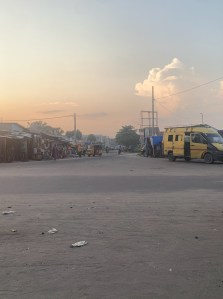 Kevin Goergen is a doctoral researcher at the University of Luxembourg, currently working on Luxembourg’s colonial entanglements from the 1880s to the 1970s. His research primarily focuses on the historical connections … Continue reading
 - Luxembourgish Traces in Kinshasa – Part 3
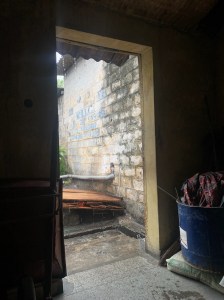 Kevin Goergen is a doctoral researcher at the University of Luxembourg, currently working on Luxembourg’s colonial entanglements from the 1880s to the 1970s. His research primarily focuses on the historical connections … Continue reading
 - Luxembourgish Traces in Kinshasa – Part 2
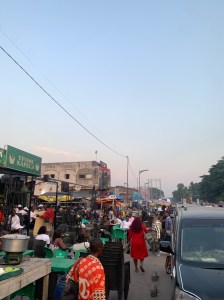 Kevin Goergen is a doctoral researcher at the University of Luxembourg, currently working on Luxembourg’s colonial entanglements from the 1880s to the 1970s. His research primarily focuses on the historical connections … Continue reading
 - Luxembourgish Traces in Kinshasa – Part 1
 Kevin Goergen is a doctoral researcher at the University of Luxembourg, currently working on Luxembourg’s colonial entanglements from the 1880s to the 1970s. His research primarily focuses on the historical … Continue reading
 - Catholic Sisters in Postcolonial Kikwit – Part 4
 Mick Feyaerts is a doctoral researcher at the research group History of Modernity and Society (MoSa) at KU Leuven. In four blog posts, she will be sharing some reflexive notes … Continue reading
 - Catholic Sisters in Postcolonial Kikwit – Part 3
 Mick Feyaerts is a doctoral researcher at the research group History of Modernity and Society (MoSa) at KU Leuven. In four blog posts, she will be sharing some reflexive notes … Continue reading
 - Catholic Sisters in Postcolonial Kikwit – Part 2
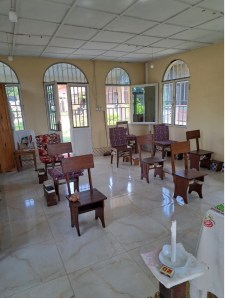 Mick Feyaerts is a doctoral researcher at the research group History of Modernity and Society (MoSa) at KU Leuven. In four blog posts, she will be sharing some reflexive notes … Continue reading
 - Catholic Sisters in Postcolonial Kikwit – Part 1
 Mick Feyaerts is a doctoral researcher at the research group History of Modernity and Society (MoSa) at KU Leuven. In four blog posts, she will be sharing some reflexive notes … Continue reading
 - Call for Contributions: CRN Field Notes Series
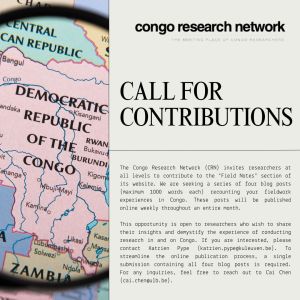 [Version française en-dessous] Call for Contributions The Congo Research Network (CRN) invites researchers at all levels to contribute to the “Field Notes” section of its website. We are seeking a … Continue reading
 - A Chinese Ethnographer in DR Congo – Part 4
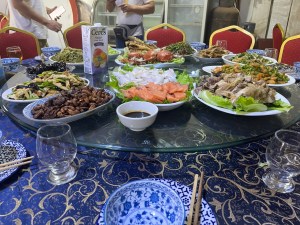 Why would a Chinese PhD student choose to conduct anthropological research in Congo? How did he secure access to the field? Do Chinese-Congolese couples exist, considering the “self-segregation” of the … Continue reading
 - A Chinese Ethnographer in DR Congo – Part 3
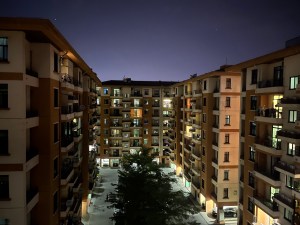 Why would a Chinese PhD student choose to conduct anthropological research in Congo? How did he secure access to the field? Do Chinese-Congolese couples exist, considering the “self-segregation” of the … Continue reading
 - A Chinese Ethnographer in DR Congo – Part 2
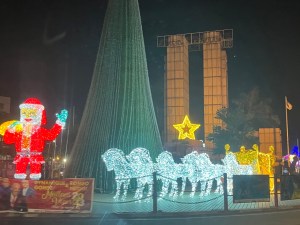 Why would a Chinese PhD student choose to conduct anthropological research in Congo? How did he secure access to the field? Do Chinese-Congolese couples exist, considering the “self-segregation” of the … Continue reading
 - A Chinese Ethnographer in DR Congo – Part 1
 Why would a Chinese PhD student choose to conduct anthropological research in Congo? How did he secure access to the field? Do Chinese-Congolese couples exist, considering the “self-segregation” of the … Continue reading
 - A Congo Journey 1958 – Part FourCatherine Hoskyns is currently Professor Emerita in International Relations at Coventry University, UK. In 1965 she published The Congo since Independence Jan 1960 – Dec 1961, a study of the breakdown … Continue reading
- A Congo Journey 1958 – Part ThreeCatherine Hoskyns is currently Professor Emerita in International Relations at Coventry University, UK. In 1965 she published The Congo since Independence Jan 1960 – Dec 1961, a study of the breakdown … Continue reading
- A Congo Journey 1958 – Part twoCatherine Hoskyns is currently Professor Emerita in International Relations at Coventry University, UK. In 1965 she published The Congo since Independence Jan 1960 – Dec 1961, a study of the breakdown … Continue reading
- A Congo Journey 1958Catherine Hoskyns is currently Professor Emerita in International Relations at Coventry University, UK. In 1965 she published The Congo since Independence Jan 1960 – Dec 1961. a study of the … Continue reading
- « Au-dessous du volcan », rencontres littéraires de Goma, 14-16 juin 2018. Deuxième partie
 Par Parfait Nzeyimana et Charly Mathekis Trente minutes que nous voguons sur le lac Kivu. Si le temps était élastique, on serait toujours là, devant la vue de l’eau formant … Continue reading
 - « Au-dessous du volcan », rencontres littéraires de Goma, 14-16 juin 2018. 1ière partieMaëline le Lay (CNRS/IFRA-Nairobi): Clin d’œil à Malcolm Lowry, hommage aux Grands Lacs viale volcan Nyiragongo qui surplombe le lac Kivu entre Congo et Rwanda, la première édition des … Continue reading
- Researching energy in Katanga – part 4During the following four weeks (Feb 2-24 2018) Nick Rahier, a doctoral researcher at the Institute for Anthropological Research in Africa (IARA) at KU Leuven University (Belgium), will be sharing some reflective notes about his field … Continue reading
- Researching energy in Katanga – part 3During the following four weeks (Feb 2-24 2018) Nick Rahier, a doctoral researcher at the Institute for Anthropological Research in Africa (IARA) at KU Leuven University (Belgium), will be sharing some reflective notes about his field … Continue reading
- Researching energy in Katanga – part 2During the following four weeks (Feb 2-24 2018) Nick Rahier, a doctoral researcher at the Institute for Anthropological Research in Africa (IARA) at KU Leuven University (Belgium), will be sharing some reflective notes about his field … Continue reading
- Researching energy in Katanga – Part 1During the following four weeks (Feb 2-24 2018) Nick Rahier, a doctoral researcher at the Institute for Anthropological Research in Africa (IARA) at KU Leuven University (Belgium), will be sharing some reflective notes about his field … Continue reading
- « Polisi Siku Kwa Siku », everyday policing in the DRC (English and French versions) – Part 2.Kukufa mu gratuité (to die for nothing): Making a living in Bukavu’s police by Michel Thill This is the second installment of a three-blog series written by Robert Njangala, … Continue reading
- « Polisi Siku Kwa Siku », everyday policing in the DRC (English and French versions) – Part 1.This is the first installment of a three-blog series written by Robert Njangala, Josaphat Musamba and Michel Thil, in the framework of the Dutch-funded pilot project “Polisi Siku Kwa Siku” … Continue reading
- Medical technologies in postcolonial Kikwit – Part 4.During the following four weeks (Feb 19-March 12 2017) Trisha Phippard, a doctoral researcher at the Institute for Anthropological Research in Africa (IARA) at KU Leuven University (Belgium), will be sharing … Continue reading
- Medical technologies in postcolonial Kikwit – Part 3.During the following four weeks (Feb 19-March 12 2017) Trisha Phippard, a doctoral researcher at the Institute for Anthropological Research in Africa (IARA) at KU Leuven University (Belgium), will be sharing … Continue reading
- Medical technologies in postcolonial Kikwit – Part 2.During the following four weeks (Feb 19-March 12 2017) Trisha Phippard, a doctoral researcher at the Institute for Anthropological Research in Africa (IARA) at KU Leuven University (Belgium), will be sharing … Continue reading
- Medical technologies in postcolonial Kikwit – Part 1.During the following four weeks (Feb 19-March 12 2017) Trisha Phippard, a doctoral researcher at the Institute for Anthropological Research in Africa (IARA) at KU Leuven University (Belgium), will be sharing … Continue reading
- Research in and around Inga – Part 4.During the following four weeks (Jan 20-Feb 13 2017) Barbara Carbon, a doctoral researcher at the Institute for Anthropological Research in Africa (IARA) at KU Leuven University (Belgium), will be sharing some … Continue reading
- Research in and around Inga – Part 3.During the following four weeks (Jan 20-Feb 10 2017) Barbara Carbon, a doctoral researcher at the Institute for Anthropological Research in Africa (IARA) at KU Leuven University (Belgium), will be sharing some … Continue reading
- Research in and around Inga – Part 2.During the following four weeks (Jan 20-Feb 10 2017) Barbara Carbon, a doctoral researcher at the Institute for Anthropological Research in Africa (IARA) at KU Leuven University (Belgium), will be sharing some … Continue reading
- Research in and around Inga – Part 1During the following four weeks (Jan 20-Feb 10 2017) Barbara Carbon, a doctoral researcher at the Institute for Anthropological Research in Africa (IARA) at KU Leuven University (Belgium), will be sharing some … Continue reading
- Old Age in Kinshasa – Part 4.PHOTOGRAPHING THE BANA LEO SHOWS By Katrien Pype, research professor at IARA (KU Leuven, Belgium) and Fellow at DASA (University of Birmingham) – blog September 2016. This is the final … Continue reading
- Old age in Kinshasa – Part 3.PAPA WEMBA AND THE CONFUSION OF GENERATIONS By Katrien Pype, research professor at IARA (KU Leuven, Belgium) and Fellow at DASA (University of Birmingham) – blog September 2016. This is … Continue reading
- Old age in Kinshasa – Part 2.By Katrien Pype, research professor at IARA (KU Leuven, Belgium) and Fellow at DASA (University of Birmingham) – blog September 2016. This is a 2nd of four blogposts that are … Continue reading
- Old age in Kinshasa. – Part 1by Katrien Pype, research professor at IARA (KU Leuven, Belgium) and Fellow at DASA (University of Birmingham) – September 2016. This is a series of four blogposts that are … Continue reading
- Third post by Charlotte MertensColonial Memories, Sexual Violence and Current Humanitarianism Conducting archival work in the Africa Museum of Tervuren, I am amazed by the many expressions of genuine concern on the part of … Continue reading
- 2nd blog post by Charlotte MertensDear all, please read the 2nd blog post by Charlotte Mertens on her research on sexual violence in eastern DRC: https://congoresearchnetwork.com/2013/09/04/2nd-blog-post-by-charlotte-mertens/ also, some corrections have been made … Continue reading
- 2nd blog post by Charlotte MertensResearching sexual violence in the armed conflict of eastern DRC October 2012. Lake Kivu. The boat takes us from Bukavu to Goma. Lively Congolese rumba music comes from ‘la boîte/disco’ … Continue reading
- First Blog Post by Charlotte MertensResearching sexual violence in the armed conflict of eastern DRC September 2012. My Congolese friend Marie-Noël, who runs a small, community-based NGO, welcomes us in Ruzizi, a border town between … Continue reading
- 3rd blogpost by Catherine Porter‘Change of Plans’ – Blog 3 Identities are prevalent in any society, as a political entity or a loosely grouped community of people. These identities constitute part of the fibre … Continue reading
- 2nd blog post by Catherine Porter‘Change of Plans – Part 2’ Generally one of the most striking things about the Katangan secession of 1960-1963 was the imagery and iconography created to develop a personal nationalism … Continue reading
- 1st Blog Post by Catherine Porter‘Changes to the Plan’ I’m not entirely sure how the fieldwork for my dissertation suddenly came to life. As a historian, it isn’t something you would typically expect to happen … Continue reading
- 4th and final blog post by Judith VerweijenThe challenges of researching armed actors in Eastern DRC #4: flexibly framing “realities” by avoiding the “civil society trap”, the “car-window syndrome” and “development discourse infection” Our observations of “reality” … Continue reading
- 3rd blogpost by Judith VerweijenThe challenges of researching armed actors in Eastern DRC # 3: dealing with the positionality of the research subject and the verification of fact The universal problem of uncovering the … Continue reading
- 2nd Blog Post by Judith VerweijenThe challenges of researching armed actors in Eastern DRC: #2 Balancing the analysis of discourses and practices In general, human beings tend to justify their own acts, represent reality in … Continue reading
- 1st Blog Post by Judith VerweijenThe challenges of researching armed actors in Eastern DRC: #1 overcoming sensationalism and exoticism Certainly, it was the mixture of a deep fascination for the subject matter, an attraction … Continue reading
- Researchers blogging about their field work in DR CongoRead the blog posts written by Congolese and non-Congolese researchers reflecting about their fieldwork experiences in the DRC – go to the category ‘field notes’
- 3ieme post du bloggeur invite Pedro MonavilleMise en abîme Des hommes surgissent dans un orphelinat isolé au milieu d’une clairière. Lourdement armés, ils sont résolus à s’emparer du groupe d’enfants hébergé par le missionnaire américain qui … Continue reading
- 1st post by guest blogger Gillian MathysTwo weeks ago I was talking to one of my favourite informants, in a village not that far away from Goma. The word ‘informant’ seems weird in this context, as … Continue reading
- 2ieme post du bloggeur invite Pedro MonavilleCinéma En marge de mon travail de terrain à Kinshasa, j’ai eu la chance de collaborer avec Cécile Michel, une amie photographe, à la réalisation d’un film documentaire en lien … Continue reading
- 1st blog by guest blogger Prof. Dr. D. Iyele Katamu (translated from French)THE REALM OF THOUGHT OF ANTOINE KOFFI OLOMIDE During our participation in the 2005 conference of the Institute on childhood and youth of the Council for the development of social … Continue reading
- 1er post du bloggeur invite Pedro MonavilleSur le terrain kinois Où ancrer ces notes de terrain ? Mon travail sur l’histoire du mouvement étudiant congolais des années 1960 m’a emmené dans de nombreuses villes du Congo, dans … Continue reading
- 4th entry by guest blogger Prof. Dr. Dieudonné Iyeli KatamuLES CHANTS DES MILITAIRES CONGOLAIS L’armée de la République Démocratique du Congo a une histoire riche en événements heureux et malheureux. Cette armée vit depuis les indépendances les réalités … Continue reading
- 3rd entry by guest blogger Prof. Dr. Dieudonné Iyeli KatamuLA MUSIQUE CHRETIENNE EN REPUBLIQUE DEMOCRATIQUE DU CONGO Notre recherche en cours porte sur la musique chrétienne en RDC. S’il y a assez d’écrits sur la musique « profane … Continue reading
- 2nd entry by guest blogger Prof. Dr. Dieudonné Iyeli KatamuLE FOLKLORE NTOMBA Les Ntomba de Bikoro qui se situe à la province de l’Equateur en République Démocratique du Congo, ont été au cours de leur histoire des migrations … Continue reading
- 3ieme et dernier rapport par bloggeur invite Peter Lambertz (traduction)Kinshasa, 07/03/’11 Je réfléchis déjà à comment commencer cette troisième et dernière entrée. Je vois que je ne sais pas par où commencer, quoi dire et comment présenter … Continue reading
- 1st entry by guest blogger Prof. Dr. Dieudonné Iyeli KatamuLA PENSEE D’ANTOINE KOFFI OLOMIDE Lors de notre participation aux … Continue reading
- 2ieme rapport par bloggeur invite Peter Lambertz (traduction française)Kingabwa, 20 Juin 2011 Mardi, sept heures. Il n’y a pas d’électricité. Ce qui signifie pas de café. La session de prière du matin d’à côté est terminée. J’ai maintenant … Continue reading
- 1iere rapport par bloggeur invite Peter Lambertz (traduction française)Dimanche 17 heures, Kingabwa, à table à l’extérieur de notre parcelle. Il n’y a personne autour, une situation bizarre. J’entends les oiseaux, les enfants jouent, quelqu’un répare une table à … Continue reading
- 3rd and final post by guest blogger Peter LambertzKinshasa, 03.07.11 I am thinking about how to start this third and already last entry. I see the fact that I don’t know where to start, what to tell and … Continue reading
- 2nd guest blogger Prof. Dr. Dieudonné Iyeli KatamuDieudonné IYELI KATAMU est né le 09 février 1971 à Bikoro en République Démocratique du Congo. Il a fait ses études primaires respectivement à l’Ecole primaire Upoto et à l’Ecole … Continue reading
- 2nd entry by guest blogger Peter LambertzKingabwa, 20. Juni 2011 Tuesday, seven o’clock. No electricity means no coffee. The morning prayer session from next door is over. And I am 30 now! Friday last week was … Continue reading
- 1st entry by guest blogger Peter LambertzSunday 5pm, Kingabwa, at a table outside on our compound. Noone around, a rare situation. I hear birds, children playing, someone repairing a table next door with a hammer and … Continue reading
- 1st guest blogger Peter LambertzPeter Lambertz (*1981) Biography Born and raised in Eupen, Belgium, I studied History in Louvain-la-Neuve and Brussels (mémoire de licence on 13th century history of thought), then added an MA … Continue reading
- Call for guest bloggersWe want to include reports from researchers ‘in the field’. Therefore, we invite researchers to blog during one month about their ongoing research activities, both in DR Congo and elsewhere, … Continue reading
 congo research network
Comments are closed.