Kevin Goergen is a doctoral researcher at the University of Luxembourg, currently working on Luxembourg’s colonial entanglements from the 1880s to the 1970s. His research primarily focuses on the historical connections between Luxembourg and the colonial Congo. While Luxembourgers have been present in colonies across Africa since the 1880s, most were involved in colonial projects in the Congo Basin. Luxembourg’s colonial past highlights colonialism without colonies – similar to the cases of Switzerland and Scandinavian countries such as Finland – and invites us to consider its meaning in the present day.
In a series of four blog posts, Kevin reflects on his research trip to Kinshasa in November/December 2024. Beyond his archival work at the INACO, he explores how traces of Luxembourg’s colonial history remain visible in the city’s landscape and daily life. His reflections also consider his own position – as a white historian – navigating the complexities of fieldwork in the DRC.
[Part 3] Walking Through History
Pierre was already waiting at one of the entrances to the cité Kauka, which, a few decades ago, used to be called Cité Cito, named after the Luxembourger Nicolas Cito. We walked through the streets, asking around where the local administration of the neigborhood was based. One person pointed us to a house. We crossed a terrace where a woman was cooking and kids were playing. Behind a small backdoor, in a tiny room, three women were sitting. They confirmed we were in the right place. I thought to myself, there’s no way I would’ve ever found this on my own.
I introduced myself and explained that I was interested in the history and memory of the neighborhood – originally built in the 1940s by OTRACO (Office d’Exploitation des Transports Coloniaux) to house its workers. One of the women called the deputy chief, telling him a researcher from ‘Belgium’ was here to learn more about the cité. I added that I was actually from Luxembourg, not Belgium. Does it matter? For her, probably not much – ‘Belgian’ might’ve just been an easy label for anyone from Western Europe. But for me, it did matter. My research is about highlighting how Luxembourg is entangled in colonialism, even though it never had colonies of its own.Still, this wasn’t the first or the last time someone said or assumed I was Belgian during my time in Kinshasa. Even though national identity doesn’t mean much to me personally, I often felt the need to clarify that I wasn’t Belgian – or French, or Turkish, or Lebanese, as people sometimes guessed when I denied being Belgian or French. I’m from Luxembourg. Maybe I took it so seriously that even Pierre started correcting people.
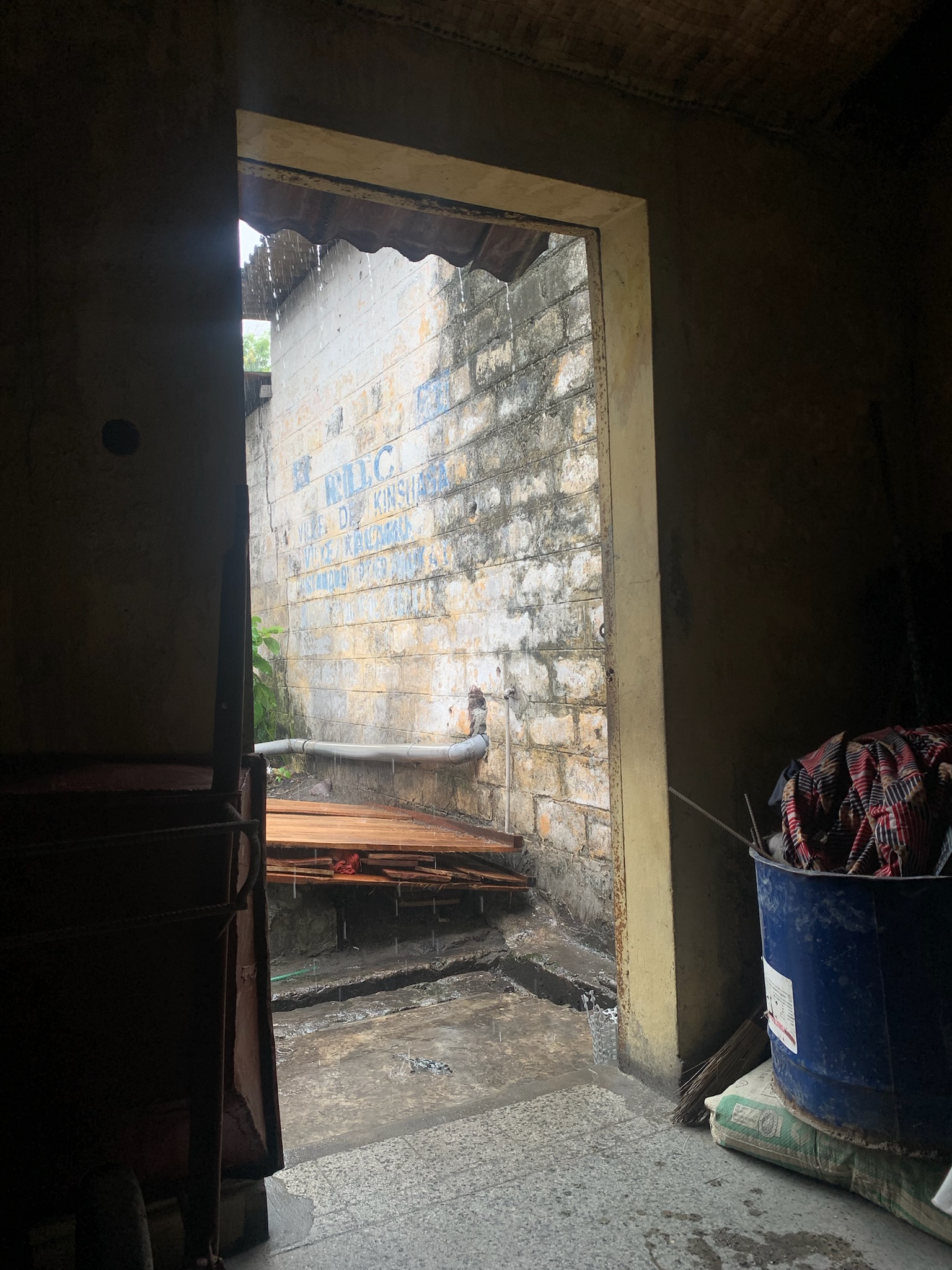
Eventually, the deputy chief arrived, we had a conversation and he handed me a paper write in handnotes about the history of the neighbourhood. It said the area was named after a ‘Belgian machinist’ named Nicolas Cito.
Two of the women offered to show me around. One of them pointed out the house where she was born – still standing, built in the 1940s. I was especially curious about the collective memory of the cité. As they confirmed, many older residents still referred to it as Cité Cito, even though that name was no longer official. When we took photos at the entrance of Cité Kauka, a few people joined us. Everyone seemed to know the name Cito. I couldn’t help but think about how Nicolas Cito is one of the most prominent colonial figures from Luxembourg, and how there has been anti-colonial and anti-racist debate in Luxembourg about his monument. Yet hardly anyone in Luxembourg knows that there was an entire neighborhood in Kinshasa named after him.
As we walked together with the two women from the administration through the neighborhood, people greeted us. One guy laughed and asked if I was here to visit the place my ancestors built. I got the joke and laughed along. Something similar had happened the week before in the archives. The day Pierre and I were asking how to get permission to visit the Cimetière des Pionniers, a staff member joked in Lingala, asking Pierre if I was going to visit my grandfather. Even though it was clearly a joke, I still felt at that moment the urge to say that my family has no colonial ties.
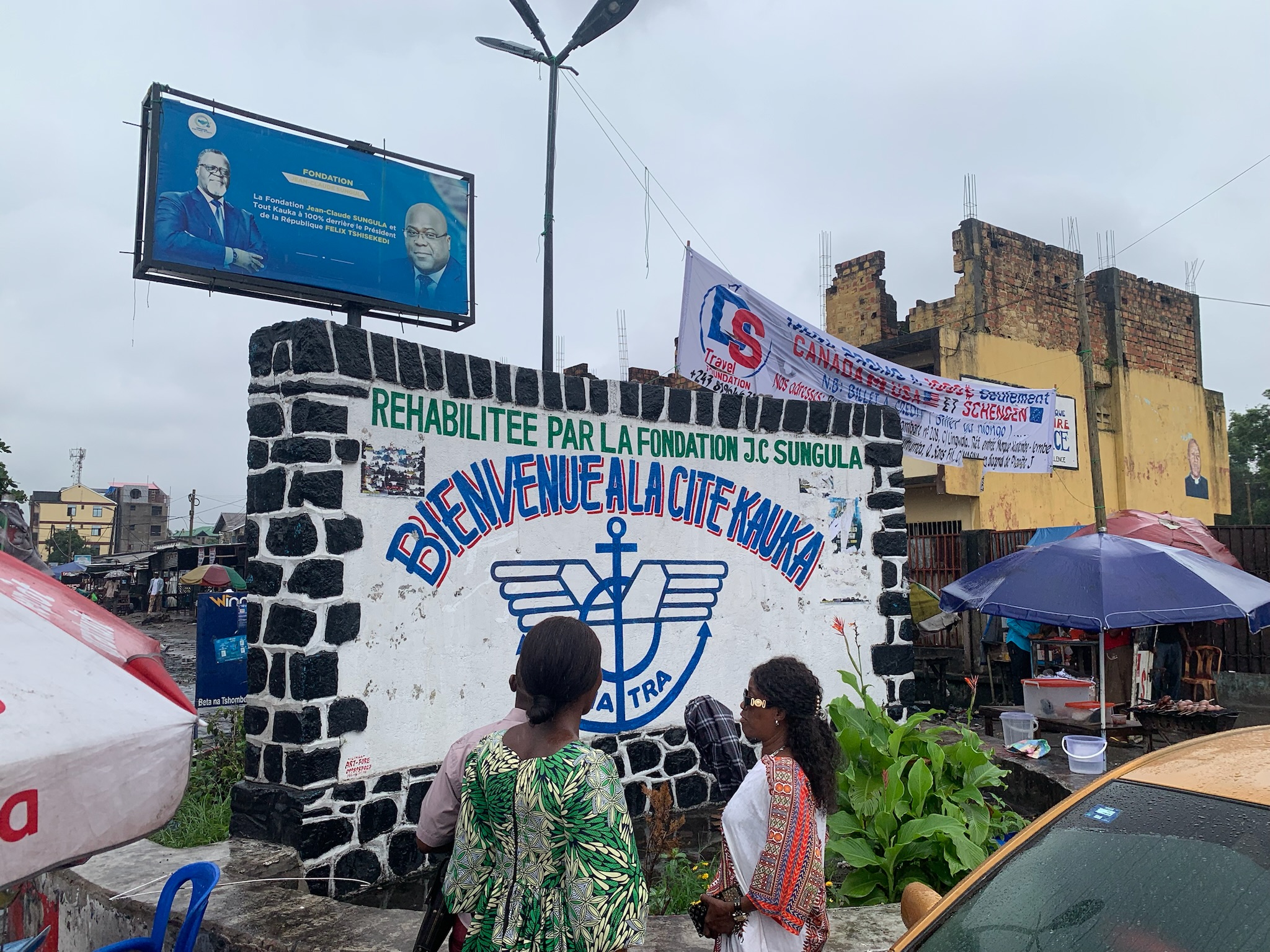
Pierre and I hopped on a motorcycle in front of Cité Kauka to Victoria, then switched to a shared taxi heading to my hotel. The whole time, I kept thinking about how much my view of Kinshasa had been shaped by my historical research and colonial archives, even before I arrived. I looked at the city and its surroundings through the lens of a historian focused on colonial history.
One day, while walking past the Gombé cemetery, I noticed one name on a grave – the person might have a connection to Luxembourg. Someone with that name had been in Congo in the 1950s. I’m not sure if it was the same person or a relative. I had previously been in touch with a family who still carry the name of their Luxembourgish grandfather. We had exchanged messages about a year earlier, and I had mentioned that I’d be coming to Kinshasa. But three weeks before my trip, I stopped hearing from them.Still, I had a lot planned for this trip. Every night I went to bed with a head full of thoughts. I brought my laptop, but I was usually too tired to use it. Most of my notes, thoughts, and observations ended up in my notebook – like my fields notes.

 congo research network
Discussion
Comments are closed.