Kevin Goergen is a doctoral researcher at the University of Luxembourg, currently working on Luxembourg’s colonial entanglements from the 1880s to the 1970s. His research primarily focuses on the historical connections between Luxembourg and the colonial Congo. While Luxembourgers have been present in colonies across Africa since the 1880s, most were involved in colonial projects in the Congo Basin. Luxembourg’s colonial past highlights colonialism without colonies – similar to the cases of Switzerland and Scandinavian countries such as Finland – and invites us to consider its meaning in the present day.
In a series of four blog posts, Kevin reflects on his research trip to Kinshasa in November/December 2024. Beyond his archival work at the INACO, he explores how traces of Luxembourg’s colonial history remain visible in the city’s landscape and daily life. His reflections also consider his own position – as a white historian – navigating the complexities of fieldwork in the DRC.
[Part 2] So, who am I here?
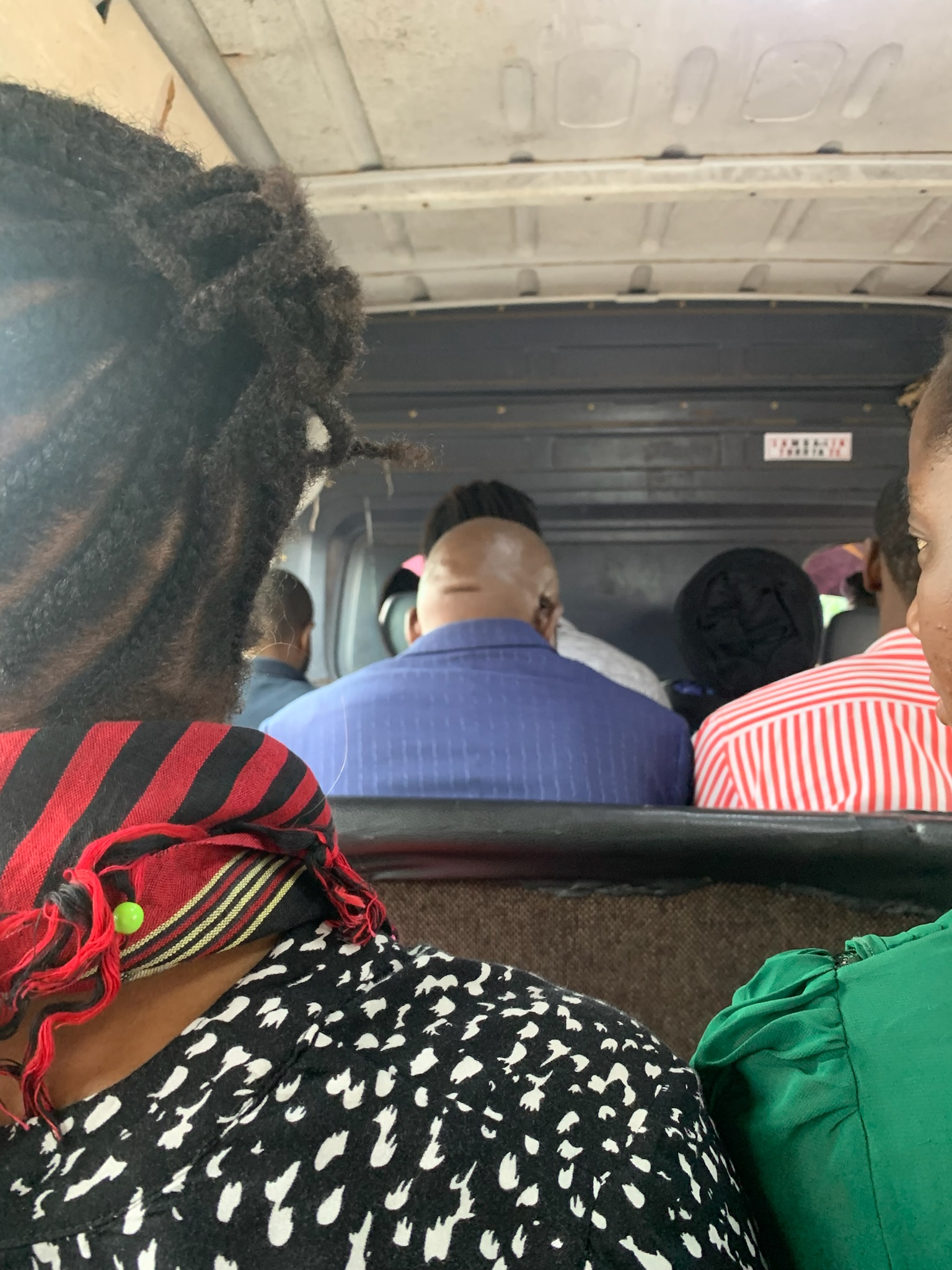
I was walking with Pierre toward Boulevard du 30 Juin. We joined a crowd at Station ‘24’, trying to squeeze into a taxi-bus. The police were there too, pushing people away from the intersection, trying to control the flow. Pierre had told me on our first day – something that stuck with me – ‘If you’re with us, you do things our way.’ I liked that attitude. For me, it meant recognising the seemingly chaotic situation and learning to move with its rhythm.
As we got in the bus, I noticed the looks. Not hostile, just curious. I interpreted them as: What’s the ‘Mundele’ (white person) doing here? It wasn’t the first time I’d felt it, and it wouldn’t be the last. However, it was a reminder of how deeply colonial entanglements still shape the present. I thought of Fanon’s words, which echoed in my mind ‘The cause is effect. You are rich because you are white. You are white because you are rich.’[1]
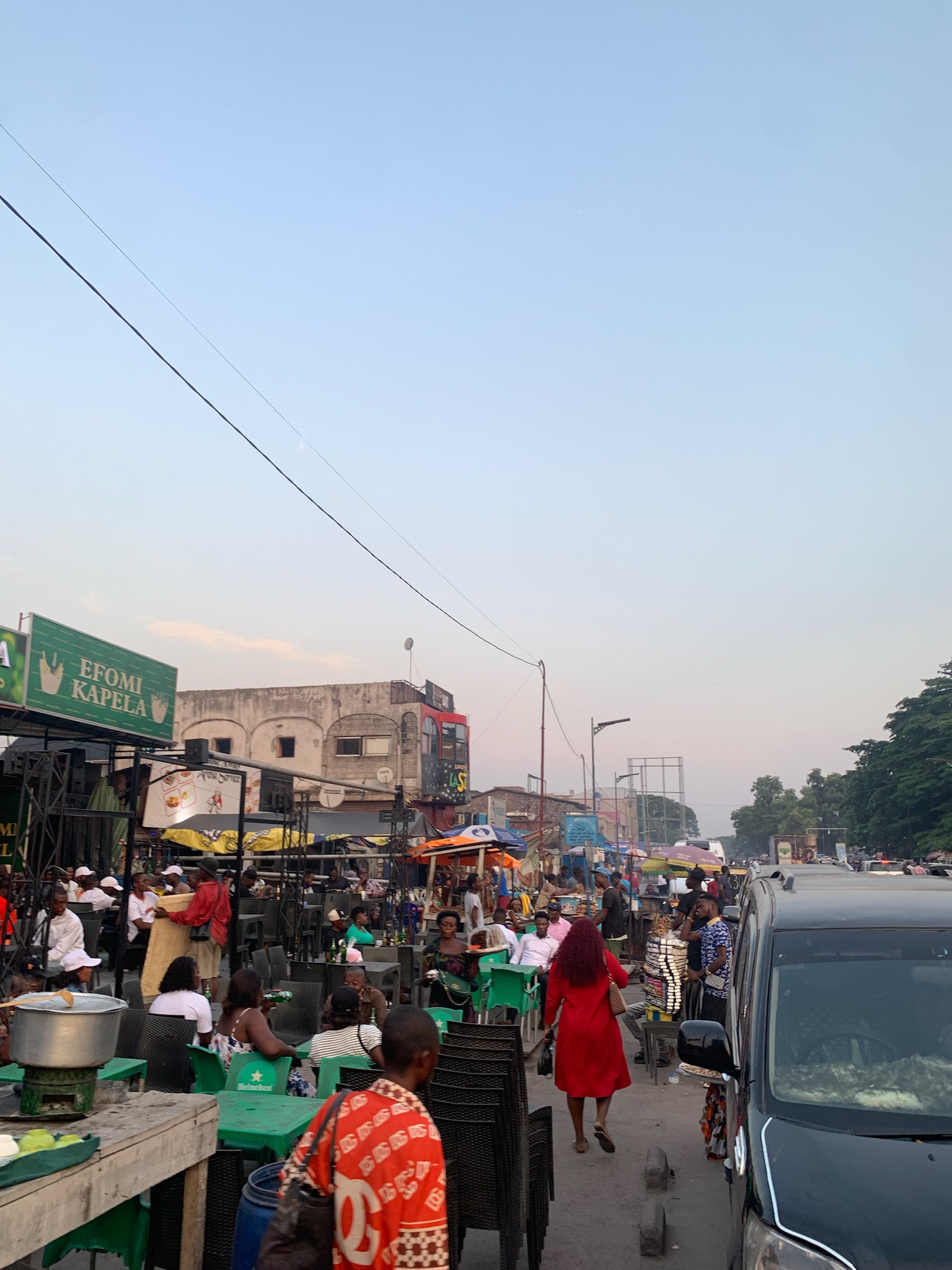
On Saturday, I met a cousin of a good friend. He invited me to his place in Ngaba. We had dinner on the terrace with some of his friends, during which I enjoyed great conversations, and had to answer lots of questions about life in Europe. After that, we headed out, walked through the neighbourhood, and caught a trois pneus (a motorized tricycle) toward Kapela. My presence definitely bumped up the fare and I could feel how it also drew attention to all of us as a group. Later, as I took a ‘Yango’ (a ride-hailing service, similar to Uber and Bolt) back to Gombe, the driver asked what I was doing here. I assumed he meant Kinshasa, but he was actually talking about Kapela.
One of my research focuses is on the shades of ‘whiteness’ or ‘Europeanness’ – how it intersects with colonial identities and positions within economic structures. As a historian studying national identity and whiteness in colonial Congo, I found myself constantly reflecting on these themes, especially in conversations with colleagues from the University of Kinshasa and people I met along the way. I knew, I wasn’t just seen as a mundele, but as a vrai blanc. I had come across the term, or similar ones, during previous travels in other African countries, however, I wanted to understand what people meant when they used it.
On Sunday, I wanted to check out several addresses mostly in Gombe that I had researched before my trip. A contact helped me out with his car. Because of the rain, we only got out briefly to take a closer look or snap some photos. The first few places were easy to find, like the former Luxembourg consulate, which only existed after Congo’s independence, and some old shops on Avenue de l’Équateur and Avenue de la Paix. The ‘Patisserie Nouvelle’ is still there in its original building. On my first visit, I left my contact info to speak with the manager. It wasn’t until my second visit, in the third week of my trip, that I ran into her by chance and we had an interesting chat.
Finding the next addresses was trickier. The street signs didn’t match the online maps, so we had to ask around. In the rain, we drove to the Place de la Gare at the end of the boulevard. After asking around, I managed to get into the main train station, where the locomotive that first ran from Matadi to N’dolo in 1898 is still kept. It was driven by a Luxembourger, Nicolas Cito.
One place I really wanted to visit was the Cimetière des Pionniers at Mont Ngaliema, where Nicolas Grang is buried: the first Luxembourger in the Congo Basin (1882), and the first European buried at this cemetery (1883). Pierre helped me figure out how to get there. The problem: the cemetery is now on land that belongs to the presidential estate.
I was told to check with the National Museum, which had managed the site earlier. Pierre arranged a meeting with the museum director. I arrived in the morning at the museum, the main gate was locked, but a soldier at the far entrance waved me over. I hadn’t realized he meant me at first. After explaining I had an appointment, he let me in and directed me to a small office behind the museum. I explained my request to visit the cemetery and waited in the lobby; Pierre joined me shortly after. Eventually, someone came out and told us the site is now fully under presidential control. So, we decided to go directly to Ngaliema.
However, this required several changes of transport and quite a bit of time. Although I knew traffic would be bad, I hadn’t imagined it would be that bad. One driver once explained to me that the government was closing certain roads during rush hour to better manage traffic — whether it actually worked, however, remains questionable. Often, I could only visit one location per day or focus my research on a single area or neigborhood, as getting around took too much time. Sometimes, I even walked the distance, because it was faster.
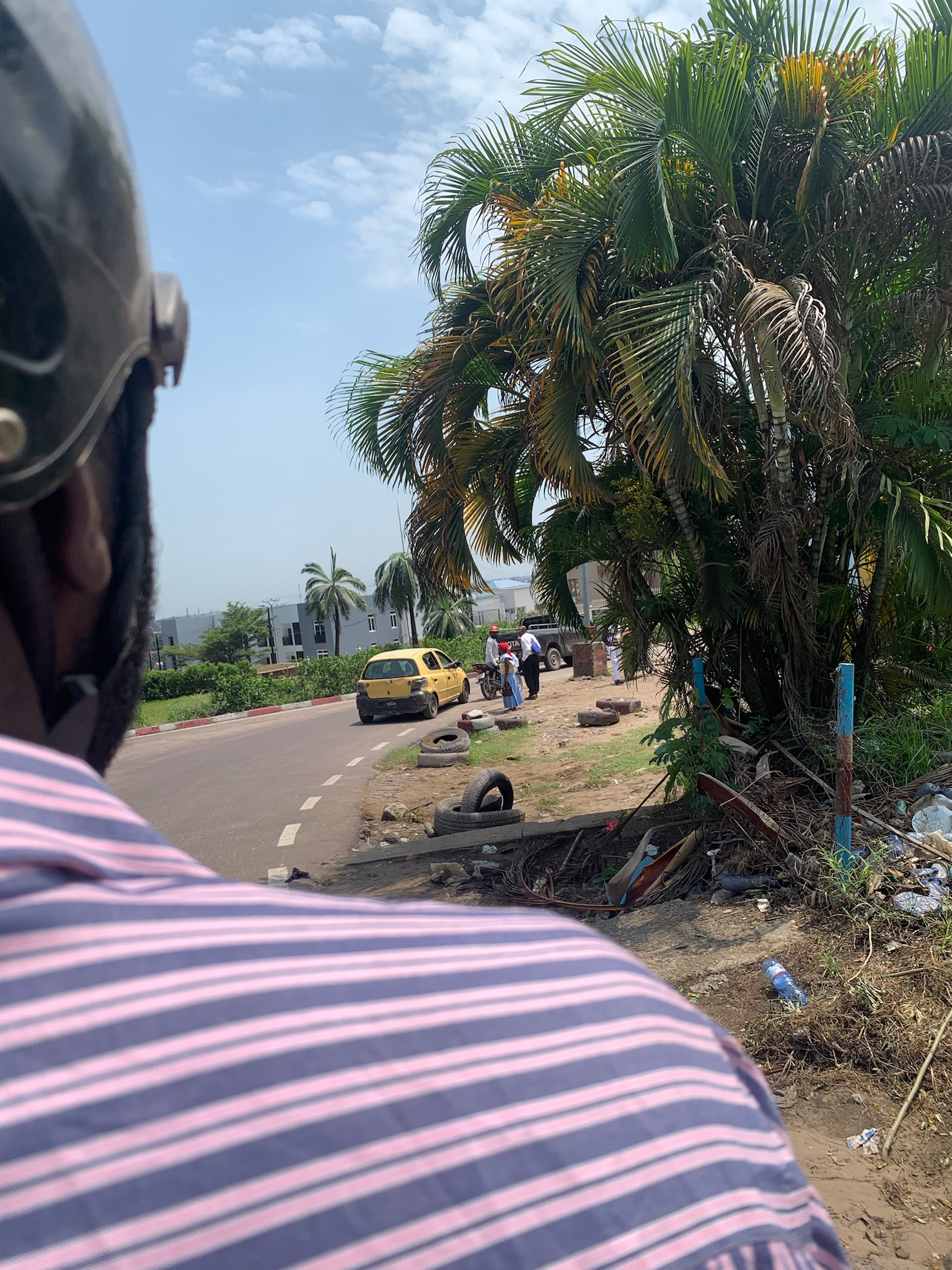
We inquired at the local municipal office of Ngaliema, and they directed us straight across the street to the presidential estate. At the gate, a small table was set up where soldiers were checking visitors. Pierre explained in Lingala that I was a researcher from Luxembourg and that I wanted to visit the cemetery as part of my work. They said that obtaining permission would normally take several weeks, but they would try to see if something could be arranged for the following week. We also spoke with people at the university of Kinshasa, hoping to find a ways to access the site. One professor told me that if I had come a year earlier, it probably wouldn’t have been a problem. When the museum still managed the site, the university organized excursions for students. But ultimately, I was never able to gain access.
[1] Franz Fanon, The Wretched of the Earth (New York: Grove Press, 1963), 40.

 congo research network
Discussion
Comments are closed.