Mick Feyaerts is a doctoral researcher at the research group History of Modernity and Society (MoSa) at KU Leuven. In four blog posts, she will be sharing some reflexive notes about her research trip in Kikwit (October 2023), during which she engaged in archival research, oral history interviews, and participant observation among Catholic sisters. Her Ph.D. project explores the postcolonial evolutions of the Roman Catholic Church in Kikwit – more specifically, she focuses on sister congregations and the hybridity that has characterized these multinational, multicultural, and multiracial institutes. How do sisters make sense of the intertwinement of their congregation’s history with colonization? What identities do they build for themselves and how does history function in that process? What place do they occupy in contemporary urban society? In the following four weeks, she will reflect on these questions.
[Part 2] Connaître ses racines
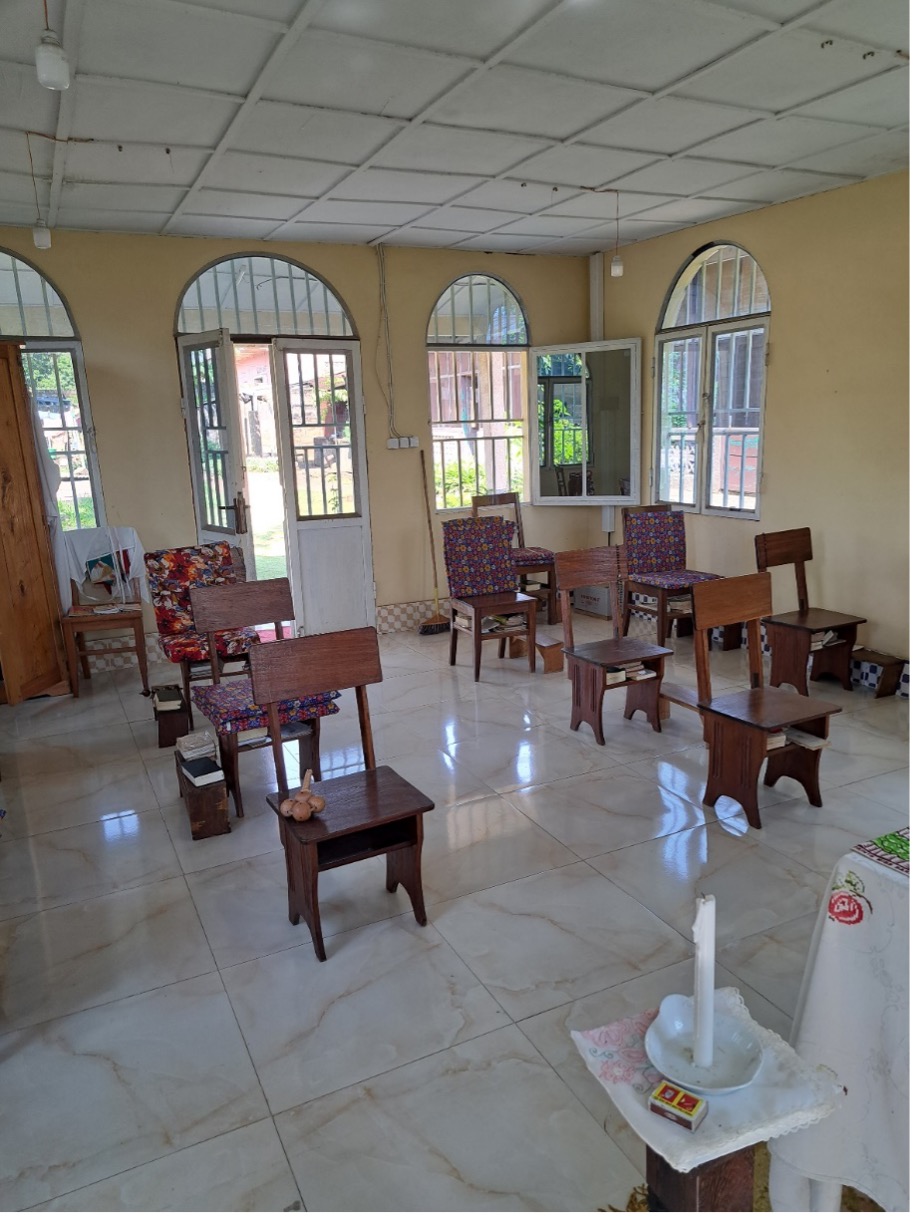
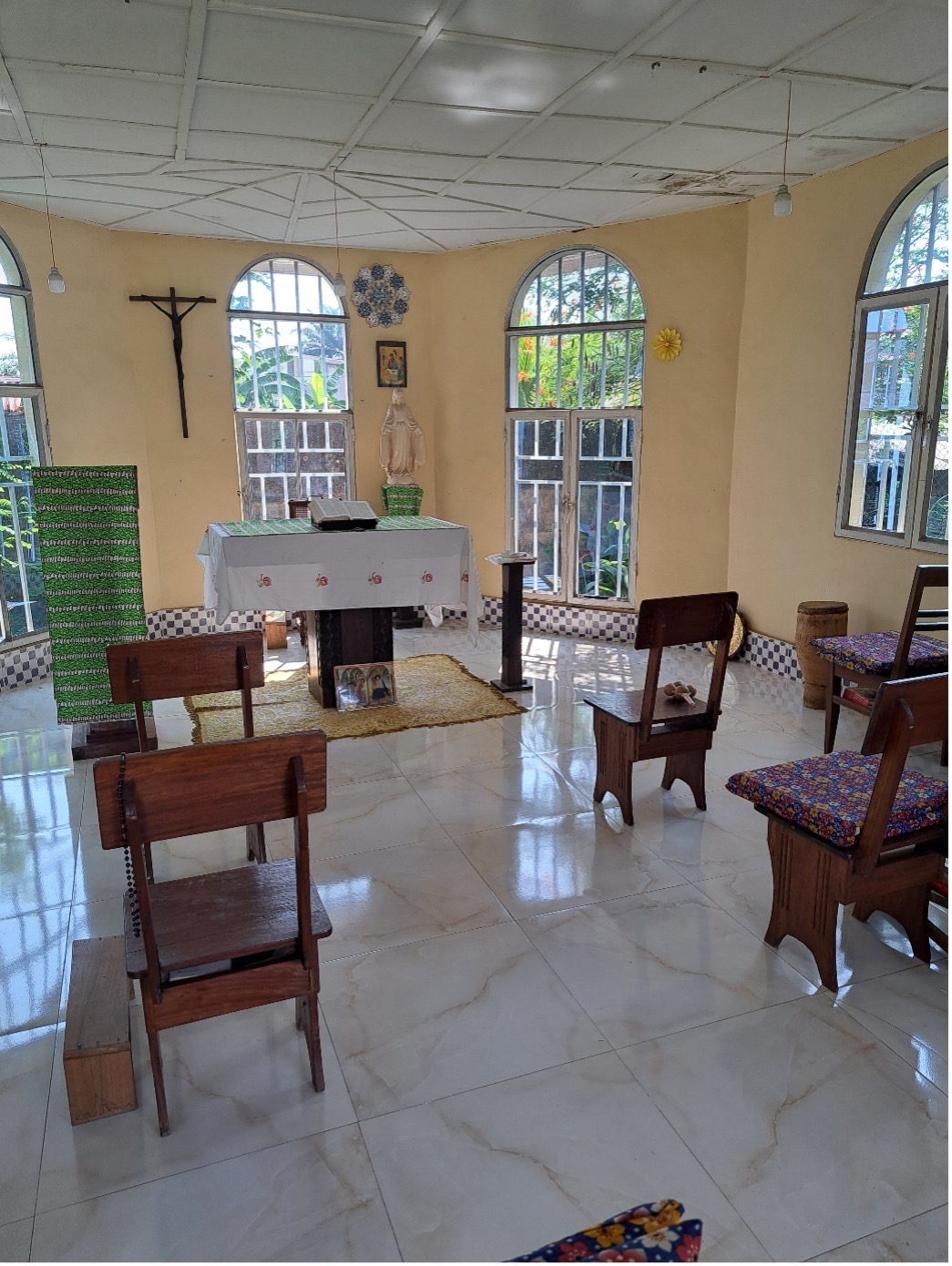
The buildings that constitute the sister communities – convent house and chapel – are palimpsests. They bring together the traces of multiple pasts, skillfully crafting them into uniquely Kikwitois female Catholic spaces. I know little about architecture, but much can be observed in the buildings’ interiors. The chapel of one of the Annonciade communities in Kikwit immediately got my full attention. While the marble-like floor tiles, the bright yellow walls, and the large windows remind me of the motherhouse’s chapel in Belgium (Heverlee), the low ceiling and the modesty of the ornamentations create an atmosphere that is much more humble and intimate than what can be observed in the Belgian chapels I have already visited. A classic statue of Mother Mary hangs next to a more abstract portrayal of Jesus on the cross. The Bible on the altar – in Kikongo, one of the four national languages of the country – rests on a pagne, a colorful piece of fabric that is also used to coat the chair cushions and serves as the official garment for the Congolese sisters. The prayer books mostly bundle chants in French that are also sung in Belgium, but here are accompanied by the rhythms of shakers and drums.
In the living room of the convent house, many more ambiguities can be observed. The salon embodies 1950s Belgian ideas of homeliness: the white lace tablecloths, decorative basket with (plastic) apples and pears, and Persian-style rugs remind me of my grandma’s living room. The no-glass windows that serve as an entry for street noise, scarce puffs of wind, and the occasional salamander or spider nevertheless make clear that outside is not my grandma’s garden, but Kikwit’s vibrant urban center. On the walls of the salon, images of Pope Francis, the bishop of Kikwit (Mgr. Timothée Bodika Mansiyay), Sœur Anuarite Nengapeta (a Sœur de la Sainte-Famille who was martyred in 1964 during the Simba revolt and beatified in 1985), Mother Mary, and Annonciade missionary sisters hang side by side, materializing Catholic icons of different cultural backgrounds in the space. On one of the walls, a pink plaque briefly reads the congregation’s history and mission statement, going back to 18th-century Belgium and 15th-century France as the roots of the congregation’s apostolate and spirituality. The television across the room, which usually plays from 5 to 10 pm, alters between broadcasts of masses in the Vatican and Nollywood soaps and movies that dramatically depict family relationships and love triangles. When the radio plays, the sisters usually softly sing and move along with the songs that interrupt local news broadcasts.
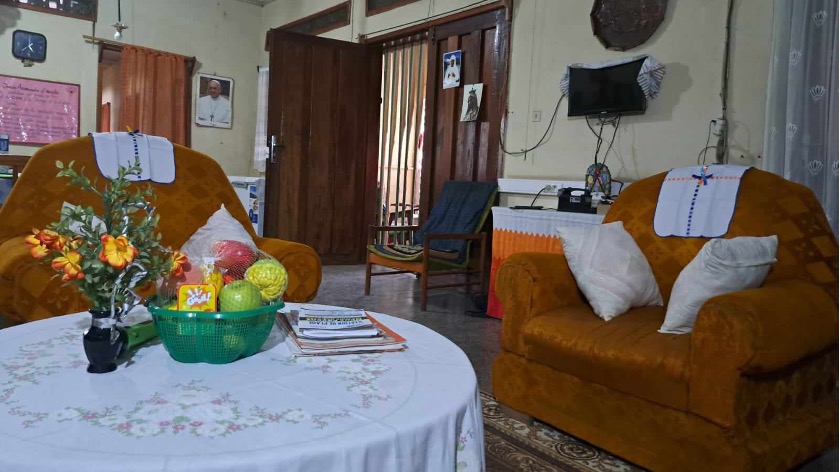
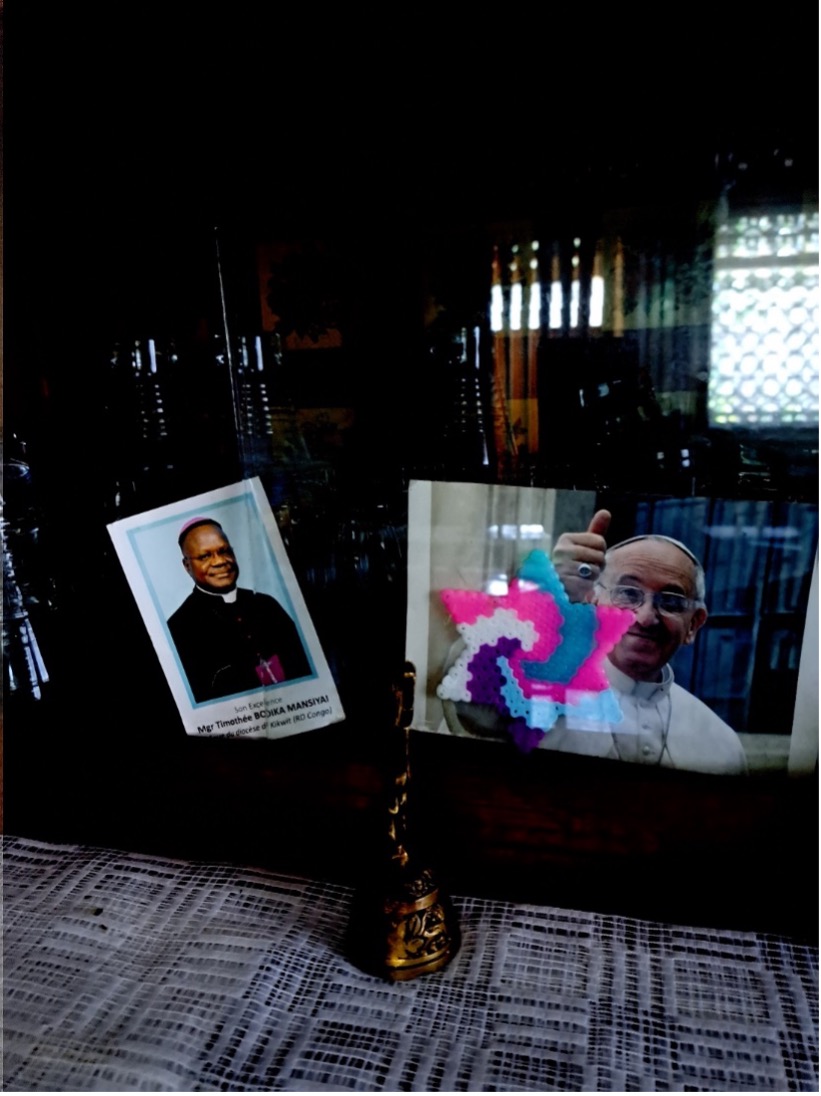
Through the materiality of the convent building and chapel, these Catholic sisters convey different pasts into their everyday lifeworld. The congregation’s missionary past and the origins of the congregation in Belgium and France are connected to the indigenization efforts of the Congolese Roman Catholic Church from the 1970s onwards, which resulted in the installment of a Zairian rite with rhythmic religious songs and dance in 1988. The localized history of Kikwit as a diocese is related to the Church as a global institute by placing the images of Mgr Mansiyay and Pope Francis next to each other. A gendered perspective is brought in through the figure of Anuarite, who embodies righteous, modest Congolese sisterhood and, as the first beatified Bantu woman, is probably the most iconic female Catholic in Congo. Mobutu’s politics of Zairisation equally impacted how the Sisters incorporated particular Bantu elements into their lifeworlds, such as pagnes, artworks, and music. Simultaneously, the TV (as well as their smartphones) connects them to the rest of the world.
All these different roots come together in the physicality and the materiality of the female Catholic community. They are negotiated quite consciously, for the Sisters emphasize the importance of knowing one’s roots, “connaître ses racines”. Knowing, narrating, and celebrating where one comes from seem central to how the sisters understand and live their religiosity, which is a palimpsestic mixture of Belgian ideas of congregational life and homeliness, Vatican influence, Kongo habits, local Kikwitois evolutions, broader Congolese politics, and transnational popular culture.
*The blog post refers to individual sisters with pseudonyms.

 congo research network
Discussion
Trackbacks/Pingbacks
Pingback: Catholic Sisters in Postcolonial Kikwit – Part 1 | congo research network - May 8, 2024