Mick Feyaerts is a doctoral researcher at the research group History of Modernity and Society (MoSa) at KU Leuven. In four blog posts, she will be sharing some reflexive notes about her research trip in Kikwit (October 2023), during which she engaged in archival research, oral history interviews, and participant observation among Catholic sisters. Her Ph.D. project explores the postcolonial evolutions of the Roman Catholic Church in Kikwit – more specifically, she focuses on sister congregations and the hybridity that has characterized these multinational, multicultural, and multiracial institutes. How do sisters make sense of the intertwinement of their congregation’s history with colonization? What identities do they build for themselves and how does history function in that process? What place do they occupy in contemporary urban society? In the following four weeks, she will reflect on these questions.
[Part 1] “Bienvenue chez toi!”
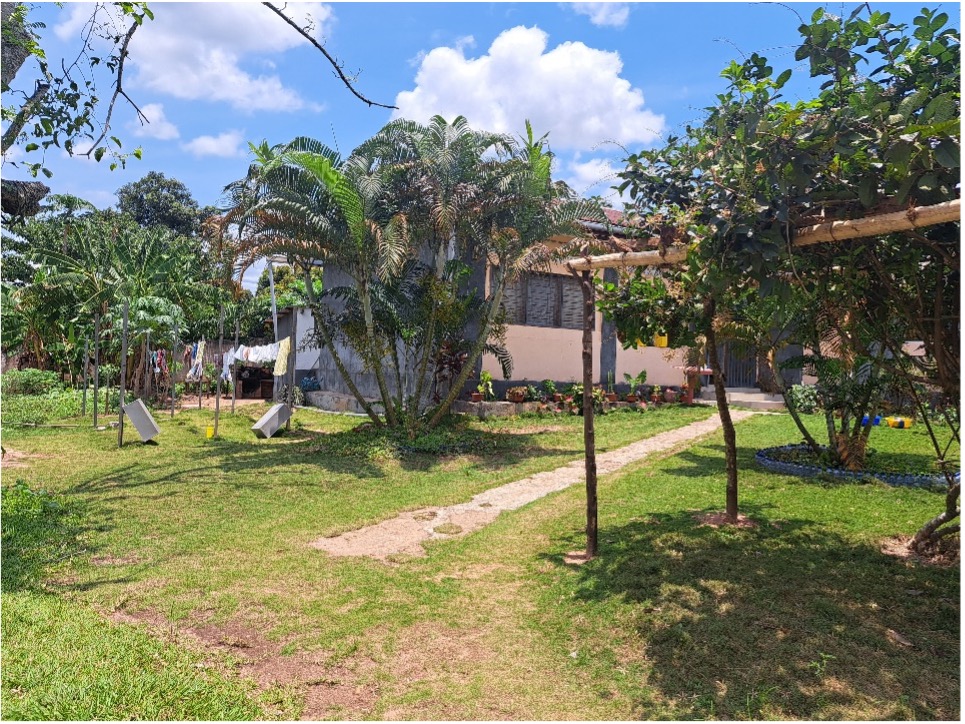
Despite her promise to tell me all about Congo and its landscape during the twelve-hour bus ride from Kinshasa to Kikwit, sister Angèle* had fallen into a deep sleep by the time the bus had exited the urbanized area of the capital and the Pentecostal preacher had finished blessing the bus. Holding her paternoster with both hands, her chin resting on her chest, she only ever lifted her head to point out to me the rivers we passed (as if she sensed we were nearing them), to yell at the bus driver for driving too recklessly, or to buy arachides through the bus window from the vendors in the villages along the road. Upon our arrival in Kikwit, she had revived well enough to – politely – scold the police officer who bugged only me (the only white passenger) with extensive passport control, and to convince him and the other passengers that I was, in fact, her nièce métisse from Belgium. Although it was unclear to what extent the other passengers believed this flagrant lie, it did break the ice. My Belgian passport was a great conversation starter with the priest from France who had been sitting in the seat behind me the entire ride, and who shared sister Angèle’s indignation with the selectivity of the police controls.
The brother-in-law of one of the sisters and his son, who served as our drivers for the evening, had been waiting for us near the bus agency in Kikwit. They both kindly dragged our bags and suitcases to their red Opel Corsa, carefully squeezing them in the trunk without damaging our most precious cargo: a large bag filled with hosts. Since she was making the trip anyway, sister Angèle had been charged with the transportation of what to me looked like a year’s supply of sacramental bread to one of the sister communities in the center of Kikwit. Barely fitting four passengers and double the amount of bags and suitcases, the car drove off to the maison mère, the community where the congregation’s local council resides and where I was going to spend the following three weeks. The community’s superior, sister Chantal*, who was home alone because the council members were on work trips in Kinshasa and Cameroon, greeted me enthusiastically and kindly showed me my bedroom. The small, rectangular dorm just about fitted a single bed covered with a mosquito net, a desk, a cupboard, and a non-functioning sink. A bucket provided me with water to wash myself, while water to drink and brush my teeth was to be tapped from the filter in the common room. And as if it was a real guest house, the sisters had also supplied the room with a new toothbrush, a tube of toothpaste, and a bar of soap.
On my first night in Kikwit, I slept like a baby. I was woken up only once by a heavy storm that appeared to be located right above our house. Although they were some of the scariest and loudest bursts of thunder I had ever heard, I was too tired to think much of it, and the rain that occasionally washed through the open window actually provided much-welcomed cooling. Only in the morning I learned that sister Chantal had been knocking on my door that night, worried that I was either scared from the storm, had left my window open, or had my phone too close to my bed, which could possibly attract lightning. I had not heard a thing.
In the days that followed, I started exploring the congregation and its communities in Kikwit. The sisters of the Annunciation (Apostolic Annonciades) were founded in Flanders (Belgium) in the late 18th century, developed an apostolate in education, and left for the missions in then Belgian Congo in 1931. In what later would become the Kwilu province, they managed and staffed about a dozen mission stations providing education and health care for the local population. In 1966 they founded their first community in the center of Kikwit, and from then onwards gradually built out their presence in the city. Counting seven communities in Kikwit with a little less than 50 sisters, the Annonciades are one of the largest sister congregations in the city and have expanded their apostolate with social and pastoral work.
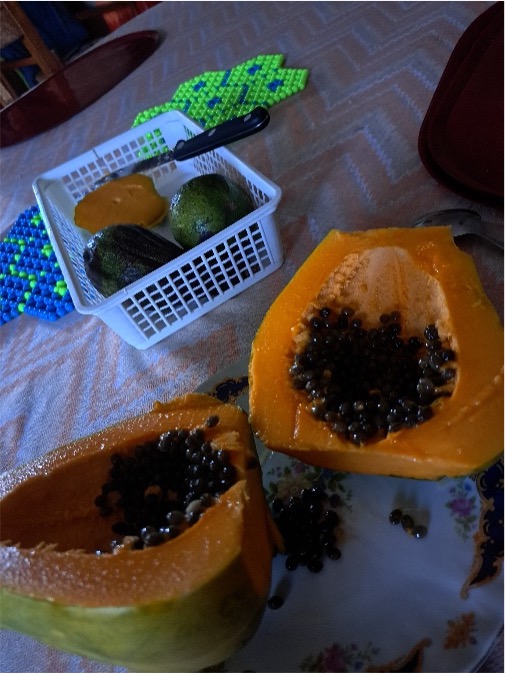
Two sisters, Jeanne* and Arlette*, kindly offered to chaperone me through the city and introduce me to persons of interest for my research. Almost every day, either one of them came to the community to pick me up – we then stood by the side of the road, outside the convent walls, waiting for a taxi to pull over and drive us to our destination. We rarely walked, and if we did, I was forced to carry my backpack on my stomach and stay close to them. When we had to cross the road, they often grabbed my hand and pulled me even closer. After my working days, which consisted of strolls and drives through the city; visits to Catholic communities, schools, universities, and an occasional bar; and reading, I always came home to a freshly cooked meal, catered especially to my “estomac belge”. The cook made me pancakes, pasta, or rice pudding, which I always had to eat all by myself because the sisters had their kettle of fufu to finish and could not keep it since the freezer was turned off at night. Meals were always closed with the sharing of a large papaya.
Throughout my stay, the sisters really went out of their way to make me feel at home, making sure I always had enough to drink and eat, had places to go and people to see, and someone to accompany or even drive me if I was going out. More than once, sister Nadine*, a council member who arrived back from Cameroon somewhere during my second week in the house, urged me to remember that I really was “à la maison” there – “tu es vraiment chez toi”.
*The blog post refers to individual sisters with pseudonyms.

 congo research network
Discussion
No comments yet.